














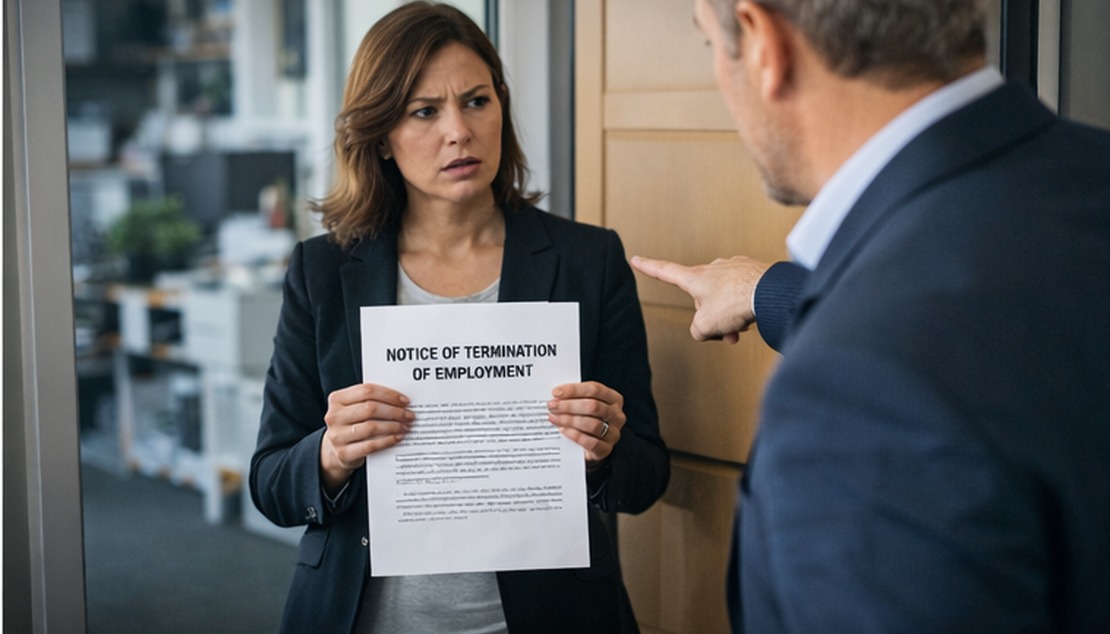







A practical guide to New Zealand 90-day trial dismissals: when the clause is valid, the start date and notice requirements, and the mistakes that can leave an employer exposed to a personal grievance.
Dismissed, made redundant, pushed to resign, dismissed under a 90-day trial or otherwise treated unfairly at work? Start with the issue below, check the time limits, and work from the actual documents and evidence.
A practical guide to New Zealand 90-day trial dismissals: when the clause is valid, the start date and notice requirements, and the mistakes that can leave an employer exposed to a personal grievance.

The legal and practical steps before dismissing for medical incapacity, including reliable medical information, consultation, prognosis, reasonable time to recover and consideration of alternatives or rehabilitation.

Two resignation-letter approaches are explained: an ordinary amicable resignation and a resignation that records the employer conduct relied on for a possible constructive-dismissal grievance.

When an accepted conditional job offer can create employment rights before the employee's first day, and the risks when an employer withdraws the offer after conditions are said to have failed.

Evidence checklist for an unjustified-dismissal or personal-grievance case: agreements, letters, texts, meeting records, rosters, pay evidence, medical material, job-search records and a reliable chronology.

What employment advocates actually do for employees and employers in mediation, ERA investigations and Employment Court litigation, including case assessment, evidence, negotiation and representation.

How no-win-no-fee employment advocacy works in practice: what counts as success, success fees, disbursements, settlement choices and the clauses clients should examine before signing.

How to prepare a concise opening statement for employment mediation that explains the chronology, the grievance, the legal position and the outcome sought without turning the opening into evidence-by-speech.