How costs are awarded
The issue of costs arises most commonly in the Employment Relations Authority (ERA) where an unsuccessful party may be ordered to pay the successful party
a contribution to the costs the successful party has incurred.
The Employment Relations Authority may order any party to pay to another party such costs and expenses connected with its investigation as the Authority thinks fit.
The Authority may also apportion any costs and expenses between the parties and has this power under the Employment Relations Act 2000, Schedule 2 clause 15.
The discretionary power to award costs must be exercised on a principled basis.
The daily tariff "starting point" (and why threats are often exaggerated)
The Authority generally awards a contribution to costs, not full lawyer-client costs. Costs are commonly approached using a notional daily tariff as a starting point and then
adjusted upwards or downwards depending on the circumstances (including party conduct and settlement offers).
Looking at the daily tariff alone, the first day is $4,500 and subsequent days are $3,500.
That is the starting point as directed by the Authority's practice note / practice direction on costs.
Practical point: While an unsuccessful employee who has taken a claim to the Authority can be liable for costs, what often occurs is that the employer threatens
much higher costs than can actually be claimed. We say: ignore the threats, and observe the actual law and the ERA's tariff-based approach.
The Da Cruz principles (ERA costs "framework")
The Authority awards costs on the basis of a daily tariff approach and will adjust the amount upwards or downwards according to party conduct, Calderbank offers,
and in accordance with the principles set out by the Employment Court in PBO Limited (formerly Rush Security Limited) v Da Cruz [2005] 1 ERNZ 8080:
- There is a discretion as to whether costs will be awarded and as to the amount.
- The discretion is to be exercised in accordance with principle and not arbitrarily.
- The statutory jurisdiction to award costs is consistent with the equity and good conscience jurisdiction of the Authority.
- Equity and good conscience is to be considered on a case-by-case basis.
- Costs are not to be used to punish or to express disapproval of a party's conduct although conduct that has unnecessarily increased costs can be taken into account in inflating or reducing an award.
- The Authority can consider whether all or any costs incurred were unnecessary or unreasonable.
- Costs generally follow the event.
- "without prejudice" (Calderbank) offers can be taken into account when setting costs.
- Awards will be modest.
- Frequently costs will be judged against a notional daily rate.
- On occasion the nature of the case will influence awards of costs so that in certain circumstances an order will be made that costs should lie where they fall.
The principles in the Da Cruz case have been accepted as being the law on costs in the Authority. It was subsequently reviewed in 2015 in
Fagotti v Acme & Co Ltd [2015] NZEmpC 135 where the Employment Court decided that Da Cruz was still good law.
What the ERA will often refuse (even when big invoices are waved around)
A common pattern we see (especially from employer-side representatives) is an attempt to claim far more than the ERA will usually award.
Some recurring examples from costs determinations include:
- Costs of mediation: often not accepted as "ERA investigation meeting" costs.
- "Costs on costs": time spent reading the substantive determination, researching costs law, and preparing costs submissions may be challenged as unreasonable/unnecessary.
- Overreach on uplift: uplifts tend to be tied to identifiable conduct (e.g., rejecting an effective Calderbank offer; wasting time; timetabling failures), not simply "we spent a lot".
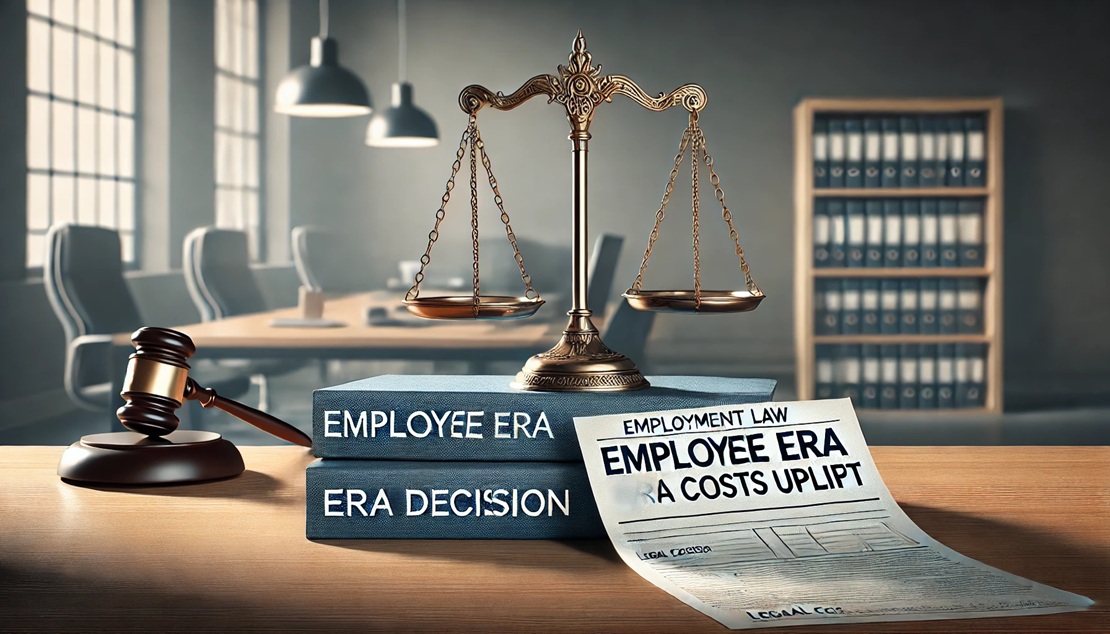
Employee-side costs uplift: when the successful employee may get more than the tariff
When an employee is successful, the employee may be entitled to a contribution to costs and, in some circumstances, costs can be uplifted above the daily tariff.
Uplift drivers can include conduct that increases time and complexity (for example: failed procedural applications, timetabling breaches, and evidential issues that extend hearing time).
Employment Court costs: higher risk and different settings
This category also covers cost issues beyond the ERA. If a matter moves into the Employment Court, costs are typically assessed under a different framework (guideline scale / Court approach),
and cost exposure can be materially higher. It is essential to do a cost-benefit assessment early and keep the litigation strategy proportionate.
Settlements, direct payment of representative costs, and GST invoices
Costs issues also arise when matters resolve by agreement. Parties can agree (and record) that an employer will pay a defined contribution to advocacy / legal costs directly to the representative
as a separate settlement term, supported by a GST invoice (often practical for both sides).
Objective of this category: To discuss real cost awards and cost reasoning in the ERA and Employment Court, and to cut through cost threats by anchoring the discussion in the actual frameworks.

![s 150A not applied; compliance on advocate s 149 invoice upheld (Mackey v Shearing NZ Ltd [2026] NZERA 146)](/Images/site/EmploymentAdvocatesAucklandCard.jpg)
![Menzies v Corrigan [2025] NZEmpC 186 - employment advocate and employment lawyer conduct](/Blog/articles/Costs/menzies_corrigan_advocate_lawyer_conduct/menzies_corrigan_01.jpg)
![Joyce v Ultimate Siteworks Limited [2024] NZEmpC 204 - costs, interlocutory outcomes and representative conduct](/Blog/articles/Costs/Joyce_Ultimate_Siteworks_advocate_lawyer_conduct/joyce_ultimate_siteworks_01.jpg)