Constructive dismissal claims arise when an employee resigns because of sufficiently serious employer conduct. This guide explains the legal tests, evidence to preserve, and why resigning too quickly can weaken a good case.
Search Employment Law
Search New Zealand employment-law guides, ERA determinations, Employment Court decisions and topics.
Search tips
- Use quotes for exact phrases, eg "unfair dismissal".
- Use +word to require, -word to exclude, eg +redundancy -trial.
- Use OR to broaden, eg dismissal OR redundancy.
Results for workplace investigation
When workplace suspension is justified, the consultation and contractual issues employers should consider, and how an unnecessary or unfair suspension can become a separate unjustified-disadvantage grievance.
What employment advocates actually do for employees and employers in mediation, ERA investigations and Employment Court litigation, including case assessment, evidence, negotiation and representation.
What the New Zealand Employment Court does, how a de novo challenge differs from an ERA investigation, key procedural stages and what parties should expect when preparing for a hearing.
What workplace bullying means in New Zealand, the difference between repeated unreasonable behaviour and ordinary conflict or performance management, and the evidence and legal options available to an affected employee.
A guide to the employment-law disputes created by workplace Covid-19 vaccination requirements, including dismissal, disadvantage, consultation, alternatives and minimum-entitlement issues.
How no-win-no-fee employment advocacy works in practice: what counts as success, success fees, disbursements, settlement choices and the clauses clients should examine before signing.
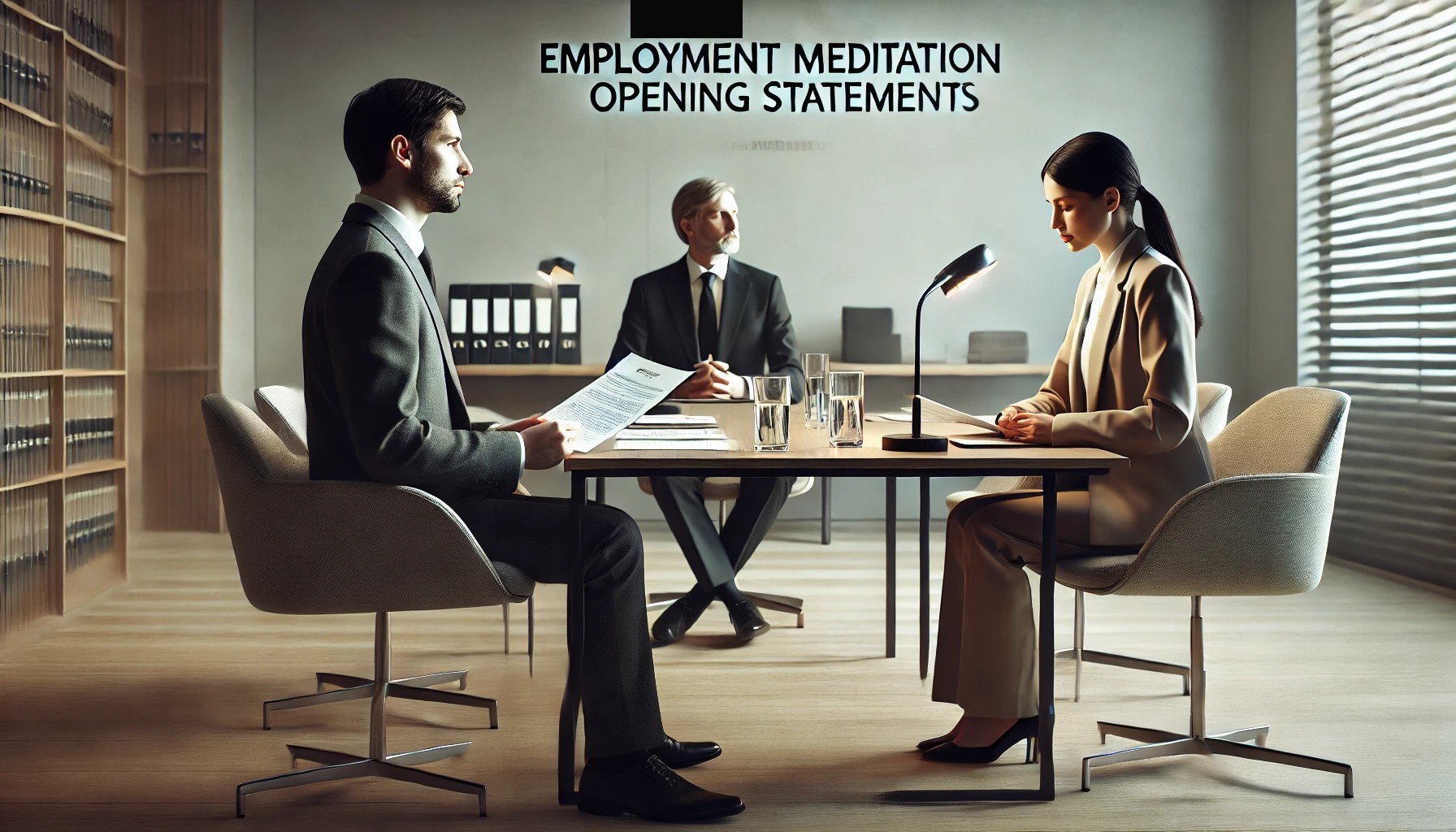
How to prepare a concise opening statement for employment mediation that explains the chronology, the grievance, the legal position and the outcome sought without turning the opening into evidence-by-speech.