
How an unfair or involuntary dismissal can affect a WINZ stand-down and why evidence of a personal grievance may be relevant when asking MSD to reconsider a non-entitlement period.
Search Employment Law
Search New Zealand employment-law guides, ERA determinations, Employment Court decisions and topics.
Search tips
- Use quotes for exact phrases, eg "unfair dismissal".
- Use +word to require, -word to exclude, eg +redundancy -trial.
- Use OR to broaden, eg dismissal OR redundancy.
Results for disciplinary
What the New Zealand Employment Court does, how a de novo challenge differs from an ERA investigation, key procedural stages and what parties should expect when preparing for a hearing.
A practical guide to an Employment Relations Authority investigation: filing, case management, witness statements, evidence, the investigation meeting, remedies, costs and preparation.
Constructive dismissal claims arise when an employee resigns because of sufficiently serious employer conduct. This guide explains the legal tests, evidence to preserve, and why resigning too quickly can weaken a good case.
What employment advocates actually do for employees and employers in mediation, ERA investigations and Employment Court litigation, including case assessment, evidence, negotiation and representation.
A practical explanation of the statutory duty of good faith in s 4 of the Employment Relations Act, including active and constructive conduct, responsiveness, communication and disclosure before adverse decisions.
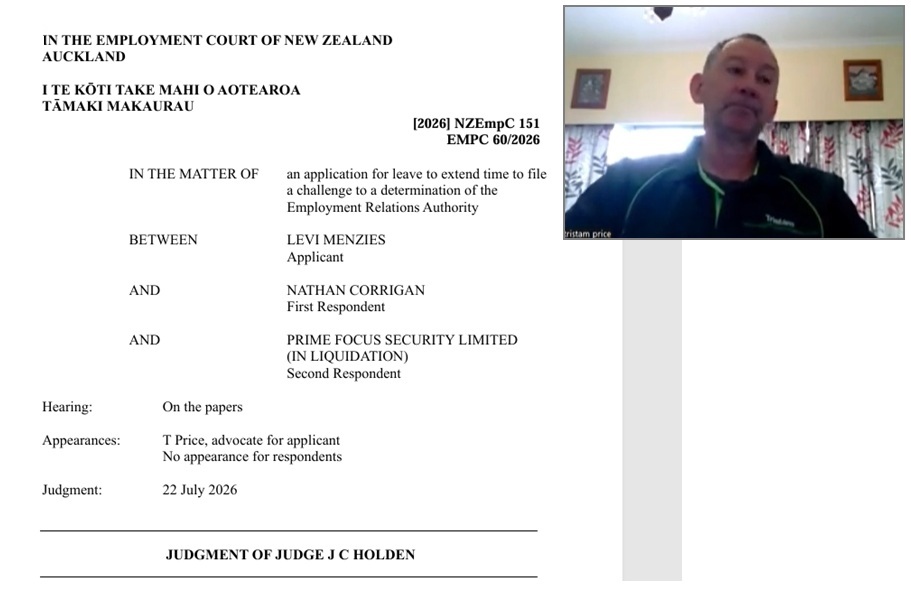
Menzies v Corrigan [2026] NZEmpC 151 - late challenge refused, substantive issues remain unresolved
ArticleMr Menzies sought to challenge an ERA compliance outcome arising from remedies originally ordered against a company that later entered liquidation. The background raised disputed accounting, disclosure, separate-legal-personality and recovery issues, but the challenge itself was filed substantially out of time.
A record-based response to commentary about Joyce v Ultimate Siteworks, Menzies v Corrigan and employment advocates, separating what the judgments actually decided from disputed characterisations and matters that remain unresolved.