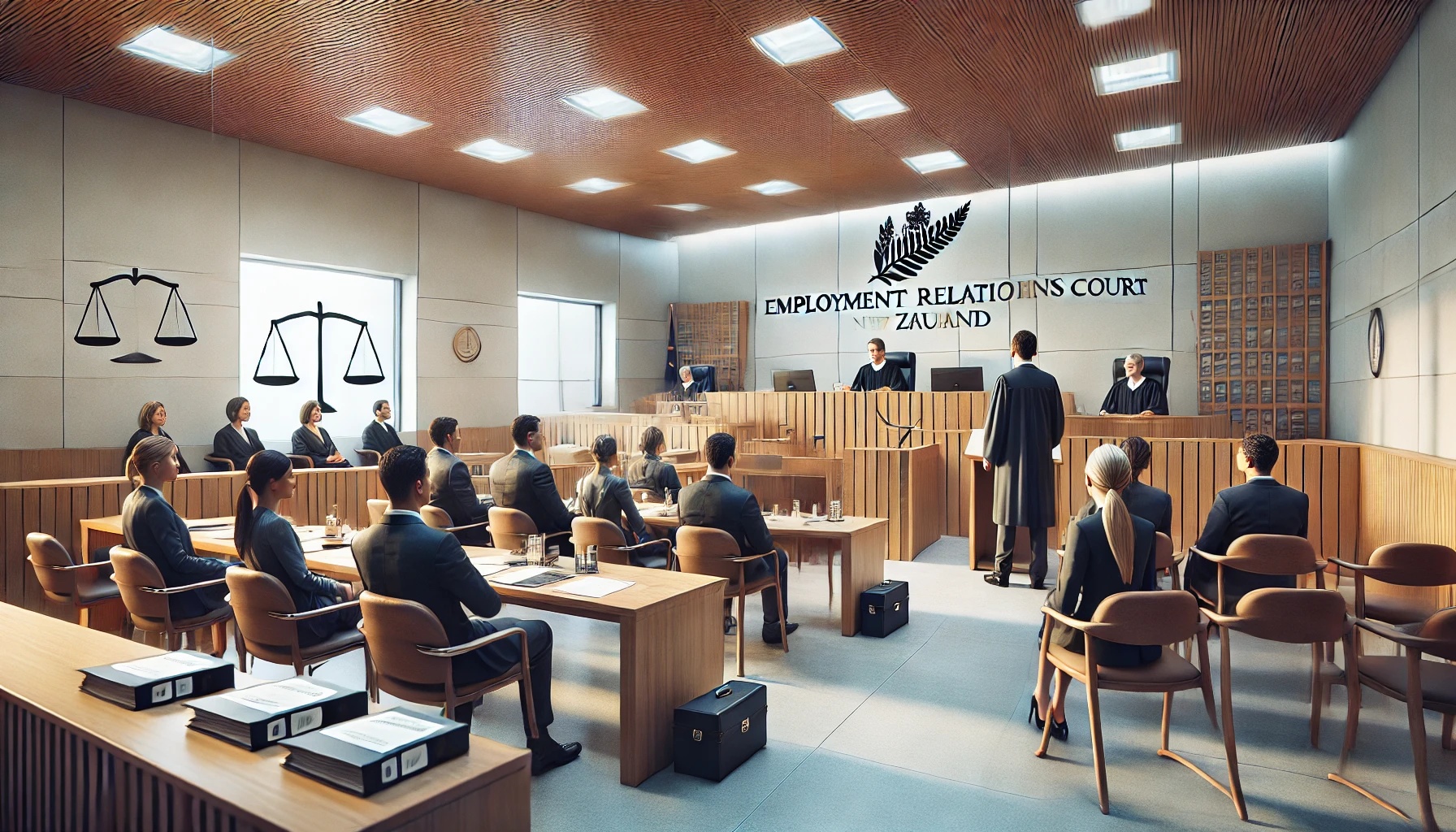
What the New Zealand Employment Court does, how a de novo challenge differs from an ERA investigation, key procedural stages and what parties should expect when preparing for a hearing.
Search Employment Law
Search New Zealand employment-law guides, ERA determinations, Employment Court decisions and topics.
Search tips
- Use quotes for exact phrases, eg "unfair dismissal".
- Use +word to require, -word to exclude, eg +redundancy -trial.
- Use OR to broaden, eg dismissal OR redundancy.
Results for lost wages
Employment Relations Authority (ERA): steps before filing and attending an ERA Investigation Meeting
ArticleThe steps that commonly occur before and after an ERA application is filed, including raising the problem, mediation, statements of problem and reply, directions, evidence and preparation for the investigation meeting.
Shaun Graves initially worked through his own contracting company, but later moved onto NZSL's PAYE payroll, worked regular hours under its direction and used its equipment. The ERA found he had become an employee from 23 September 2024 and was unjustifiably dismissed when simply told his services were no longer required.
Barfoot & Thompson dismissed senior property manager Jonathan Rhodes for medical incapacity while he was recovering from concussion and further head injuries. An imminent neurological assessment had not been obtained and the proposed alternative role did not fit clinical advice for a graduated return on reduced hours.
Duane April, a migrant worker, alleged Coatrite Fire underpaid his agreed hourly rate, made unlawful deductions, subjected him to racialised comments and later dismissed him after a defective disciplinary process. The decision maker did not attend the disciplinary meeting and important allegations were not fairly tested.
Qi Sun was an apprentice builder with Keene Construction when he queried an unpaid $300 apprenticeship-cost payment. The director then texted that there would not be a company and told him not to bother coming to work, creating a dispute about whether those messages amounted to dismissal.
Electrician Brent Colyer was investigated and given a written warning by New Zealand Aluminium Smelters after a gantry-crane incident involving another employee. He later resigned, alleging both unjustified disadvantage from the disciplinary process and constructive dismissal.
Sidney Yu and Jing Tham were engaged by Queenstown Nursery for temporary plant work and were later selected to stop working, with the employer relying on weather and alleged comparative inefficiency. The case concerned whether the casual or short-assignment characterisation justified ending their work without a fair process.