
Deborah Coley's agreement guaranteed at least 32 hours each week, but Bupa sought to vary that guarantee by averaging hours across a six-week roster and presented redundancy as the alternative if she refused. A later disciplinary investigation and written warning added a second strand to the disadvantage claim.
Search Employment Law
Search New Zealand employment-law guides, ERA determinations, Employment Court decisions and topics.
Search tips
- Use quotes for exact phrases, eg "unfair dismissal".
- Use +word to require, -word to exclude, eg +redundancy -trial.
- Use OR to broaden, eg dismissal OR redundancy.
Results for serious misconduct
Everest Corporation told automotive technician Layth Abu-Laban that his employment would end because an alleged one-year contract would not be renewed. His agreement was actually permanent, and the employer later relied on allegations of poor workmanship, customer solicitation, misuse of property and theft.
Suspension from Work
TopicSuspension is a serious step, not a punishment. An employer ordinarily needs a proper reason and fair process, and the suspension should last no longer than reasonably necessary for the investigation or risk being managed.
When workplace suspension is justified, the consultation and contractual issues employers should consider, and how an unnecessary or unfair suspension can become a separate unjustified-disadvantage grievance.
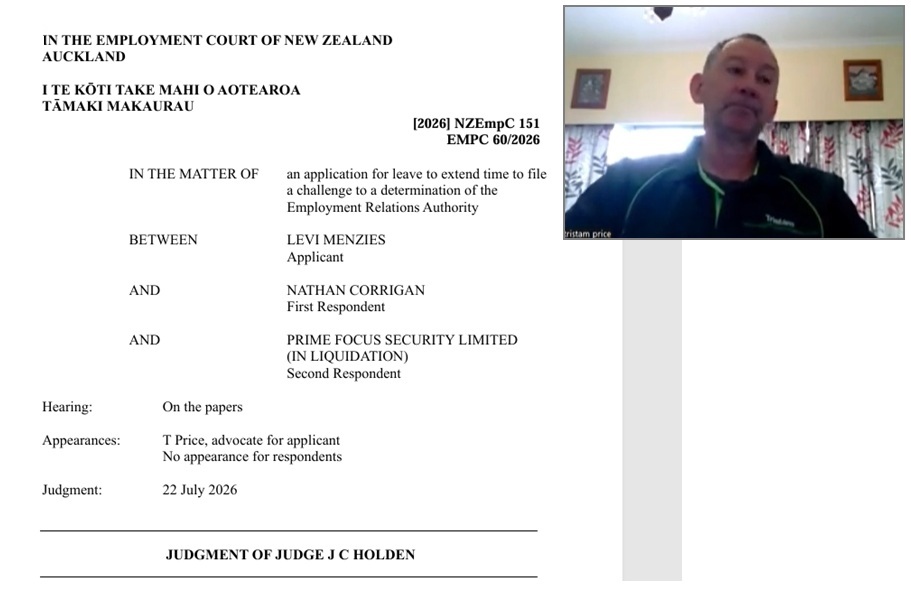
Menzies v Corrigan concerned an ERA compliance order that required a company director personally to take steps to fund a liquidated employer so grievance remedies could be paid. The challenge raised questions about s 137(2), separate corporate personality and the reach of compliance jurisdiction.
Constructive dismissal claims arise when an employee resigns because of sufficiently serious employer conduct. This guide explains the legal tests, evidence to preserve, and why resigning too quickly can weaken a good case.
Menzies v Corrigan [2026] NZEmpC 151 - late challenge refused, substantive issues remain unresolved
ArticleMr Menzies sought to challenge an ERA compliance outcome arising from remedies originally ordered against a company that later entered liquidation. The background raised disputed accounting, disclosure, separate-legal-personality and recovery issues, but the challenge itself was filed substantially out of time.
Atlas had legitimate concerns about James Honotapu's persistent absenteeism, but did not warn him that a meeting could end in dismissal. The ERA found the dismissal unjustified and ordered $8,574 after reducing lost wages and compensation by 50 percent for contribution.