

A Full Court will hear a preliminary issue in Top Produce and Bhatia on whether section 12A of the Wages Protection Act can apply to employment premiums paid outside New Zealand.
Industry news, practical commentary, and real-world employment law lessons from the coalface in New Zealand. Short updates, longer opinion pieces, and anonymised stories that highlight what goes wrong (and how to avoid it).
Updates, commentary, and practical lessons from the coalface. This is where I publish industry news, my opinion on employment law issues, and real-world stories (some anonymised, some not) that show how disputes start, how they escalate, and how they can be resolved.
Some articles in this section are short and timely. Others are longer opinion pieces or breakdowns of common failure points I see in practice. If you are looking for structured guides and explainer articles, browse the main articles and topics as well.
Employment disputes are rarely about one single event. They usually build from poor process, poor communication, missing documentation, or decisions that get locked in too early. I use this section to call out patterns I see repeatedly, and to explain the practical reality of what happens in MBIE mediation, the Employment Relations Authority (ERA), and sometimes the Employment Court.
If you are in a live dispute, treat deadlines and evidence seriously from day one. For employees, that may include the time limits for raising a Personal Grievance (PG). For employers, that means avoiding rushed responses and preserving the record before memories fade or systems overwrite.
A Full Court will hear a preliminary issue in Top Produce and Bhatia on whether section 12A of the Wages Protection Act can apply to employment premiums paid outside New Zealand.
![Menzies v Corrigan [2026] NZEmpC 151 - late challenge refused, substantive issues remain unresolved](/Blog/articles/Employment_Law_News_Opinion/menzies-v-corrigan-2026-court-151/4eddf0_9083d25fdcfa42f192e1d1c26ebdb0a8~mv2.jpg)
The Employment Court refused a substantially late challenge. That procedural result does not determine the disputed accounting, liquidation, disclosure, company-law and recovery questions that sat beneath the proceeding.
A statement of the public record concerning Joyce v Ultimate Siteworks, Menzies v Corrigan, reporting about NZBA, and commentary about employment advocates: what was actually decided, what I dispute, and what remains unresolved.
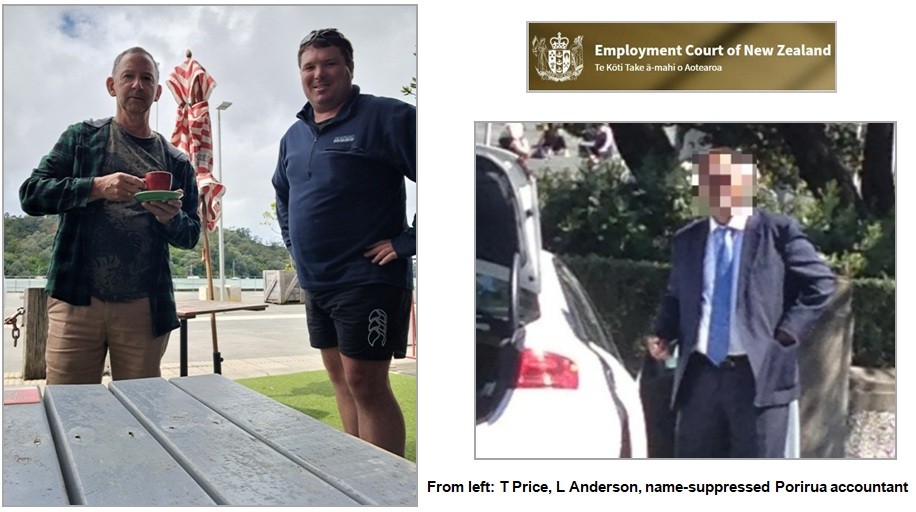
Menzies v Corrigan shows how one liquidator report comment about "excessive drawings", later financial disclosure routed through Catherine Stewart Barrister's office, and disputed accounting material became central to orders against a company director personally.
EMA has argued that employment advocates contribute to delay, cost, escalation and poor settlement behaviour. Those concerns deserve scrutiny, but an employer-member survey is not independent proof of advocate-specific systemic harm. The wider public criticism is also internally inconsistent: Graeme Colgan criticised no-win-no-fee incentives for allegedly encouraging early, cheap settlements, while EMA's later campaign, publicly advanced by Mauro Barsi and others, points to delay, escalation and inflated demands. Regulation should follow independent evidence, not professional title or employer-side dissatisfaction.
Employment Court procedure can create major cost and delay when representatives get it wrong. The problem is not confined to employment advocates: lawyers and barristers should be judged by the same standard of procedural competence.
A practical example of raising tikanga and karakia within an MBIE mediation, referring to MBIE's own mediator competency framework, and reaching a constructive outcome that improved the process.
Mackey v Shearing NZ Ltd [2026] NZERA 146 is a useful case on s 149 finality, failed confidentiality counterclaims, and direct invoice payment of non-lawyer advocate fees.